Recommended Museums to see in Paris
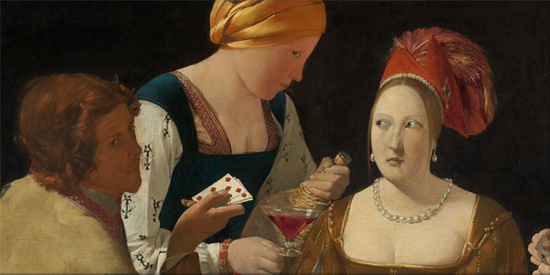
Mona Lisa , Venus of Milo, whole collection or private museums. One comes to Paris to see and see again masterpieces of greatest names of Art history: Leonardo da Vinci, Raphael, Monet, Rodin, Delacroix , Picasso, Matisse, Modigliani, Cézanne, Renoir, André Derain...
But Paris's museums offer a lot more: from prehistory and antiquities to totally contemporary art..
Museums and exhibitions are so numerous that we had to selected the places not to miss during a short stay in Paris.
You can find all museums in Paris in our Paris Landmarks
Remember that:
Museums usually open from 10am to 6pm
Museums in Paris usually closed on Monday or Tuesday and public holidays
All of them stop ticket sales 30 minutes before closing time
Most large museums have a restaurant, a cafe and a boutique offering books and items.
This is our selection of the most interesting museums to see in Paris:
1- The Louvre Museum **** (le Musée du Louvre)
Editor's choice : Louvre - Museum
The Louvre Museum - Paris
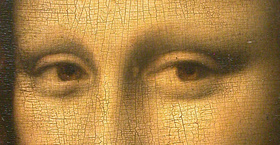
Mona Lisa - Da Vinci- Paris Louvre
Largest museum of France, The Louvre Museum (Le Musée du Louvre in French) presents collections of western art from the Middle Ages to 1850, and the antique civilisations that have preceded and influenced this art.
They are divided into 8 departments : Oriental Antiquities, Islamic Art, Egyptian Antiquities, Greek, Etruscan and Roman Antiquities and, for the modern period, Paintings, Sculptures, Art items, Prints and Drawings until 1848. In addition to these departments, the museum presents a section devoted to the history of the Louvre, including the medieval moats erected by Philippe Auguste in 1190.
21 new rooms have been dedicated to collections of Italian and Spanish paintings dating back to the XVIIth and XVIIth centuries.
Visit The Louvre Museum Art Collection photo tour
Let's not forget, the ever so famous masterpieces: the Venus of Milo, the Winged Victory of Samothrace, the Mona Lisa of Leonard da Vinci, and so many others.
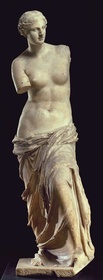
Venus of Milo - Paris Louvre
Open to all since 1793, the Louvre has embodied the concept of a truly "universal" institution. Universal in the scope of its collections, it is also universal in its appeal to some 6 million visitors every year!!
The Louvre, in its successive architectural metamorphoses, has dominated central Paris since the late 12th century. Built on the city's western edge, the original structure was gradually engulfed as the city grew. The dark fortress of the early days was transformed into the modernized dwelling of François I and, later, the sumptuous palace of the Sun King, Louis XIV.
The demolition of the Tuileries in 1882 marked the birth of the modern Louvre. The palace ceased to be the seat of power and was devoted almost entirely to culture. Only the Finance Ministry, provisionally installed in the Richelieu wing after the Commune, remained. Slowly but surely, the museum began to take over the whole of the vast complex of buildings.
The museum has the "Tourisme et Handicap" label for physical and mental disabilities, and hearing impairment. A special map shows disabled people how to move around the museum (18 lifts, 20 platforms). Totally practicable for people of limited mobility and acknowledged as such by the Parisian delegation member of the Association des Paralysés de France. Tactile space. Documentation in Braille. Visits-conferences in sign language are proposed each month for deaf people. Tel: 01 40 20 59 90; handicap@louvre.fr
2- Orsay Museum **** ( Le Musée d Orsay)
Editor's choice : Musée d'Orsay - Museum
The Orsay Museum in Paris - Le Musée d'Orsay
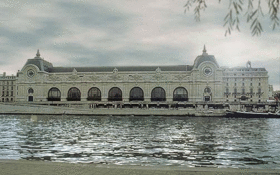
The Orsay Museum - Paris
On the eve of the 1900 World's Fair, the French government planned to build a more central terminus station on the site of the ruined Palais d'Orsay. The new station needed to be perfectly integrated into its elegant surroundings. From 1900 to 1939,
Orsay station was the head of the southwestern French railroad network. The official decision to build the Musée d'Orsay was taken in 1977 and it has been opened to the public in December 1986 in order to show the artistic creation of the western world from 1848 to 1914. It is known worldwide for its famous impressionists collections.
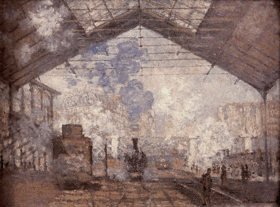
Gare St Lazare - C Monet - Paris
The museum's nationally-owned collections originate from three main institutions: the Musée du Louvre, the Musée du Jeu de Paume and the Musée National d'Art Moderne. Besides painting, sculpture, graphic arts and decorative arts, the museum has also established collections of furniture, architecture and photography.
The museum has been organized on three levels: on the ground floor, galleries are distributed on either side of the central nave, which is overlooked by the terraces of the intermediate level. These in turn opening up into additional exhibition galleries. The top floor is installed above the lobby, which covers the length of the quai, and continues into the highest elevations of the former hotel.
3- Centre Georges Pompidou**** - Beaubourg
Editor's choice : Centre Georges Pompidou - Museum
Centre national d'Art et de Culture Georges Pompidou - Beaubourg Museum
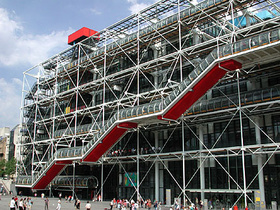
Pompidou Centre - Paris
The Centre Pompidou, called as well Beaubourg, was born in February 1977 to focus on all forms of modern and contemporary creation: sculpture, painting, books, cinema, video, performances, music, etc.
The Centre's activities:
- presentation of the permanent collections of the Musée national d’art moderne - Centre de création industrielle (Mnam-Cci),
- exhibits,
- public reading space, provided by the Bibliothèque publique d’information (Bpi),
- performances (theater, dance, music),
- cinema, symposia and debates, and publications.
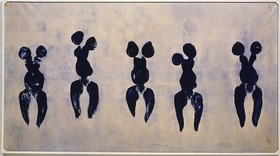
Yves Klein - Centre Pompidou - Paris
Museum and exhibitions : from 11am to 9pm.
(no ticket sales after 8pm, halls close at 8.50pm).
Night opening on Thursdays until 11pm for certain exhibitions (no ticket sales after 10pm).
The Museum & exhibitions ticket allows you to visit all current exhibitions, the Musée national d'art moderne, the Museum gallery, the Graphic art gallery, the Espace 315, the Children's gallery and the panoramic view of Paris (level 6) on the same day.
Webcams of the Centre Pompidou:
View of the Center's entrance, night and day
One of the finest views of Paris
Inside Beaubourg
Current exhibition :
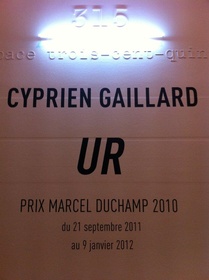
Cyprien Gaillard : "UR"
Marcel Duchamp 2010 Prize winner
From 21/09/2011 to 9/01/2012
11am to 9pm
12€
4- Rodin Museum**** (Musée Auguste Rodin)
Editor's choice : Rodin Museum - Museum
Musée Rodin Paris - Rodin Museum in Paris
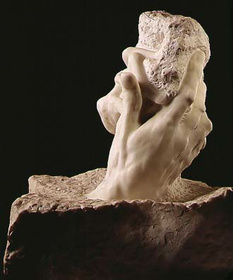
Hand of God by Rodin
Bronze and marble work by Auguste Rodin (1840-1917), works by Camille Claudel, Van Gogh, Monet, Renoir etc. Large sculpture in the garden.
As a Public Administrative Establishment under the aegis of the Ministry of Culture, the Musée Rodin is endowed with a legal personality and is independent with regard to its income and expenditure.
With an average of 500,000 visitors a year, it is one of the most popular museums in France, coming after the Louvre, Versailles and the Musée d’Orsay, but ahead of the Orangerie and the Picasso museum.
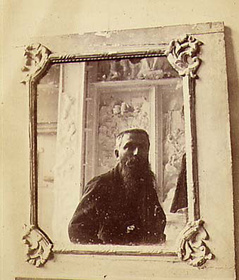
Picture of Auguste Rodin
This obviously reflects the renown and notoriety of Rodin’s work. It also reflects the special charm of the site and its grounds, the whole southern part of which was remodelled in 1993, but also of the building housing the Master’s works and collections. Everything comes from Rodin, including the chairs, armchairs or sofas where visitors are free to sit down. The Musée Rodin does not set out to reconstitute a period, which would in any case be impossible, but it offers the unique charm of an artist’s home where it is pleasant to stroll at leisure.
The Cafeteria opening hours:
9.30 a.m. to 6.30 p.m., from 1 April to 30 September
9.30 a.m. to 4.30 p.m., from 1 October to 31 March
Tel: 01 45 50 42 34
5- Palais de Tokyo ****
Editor's choice : Palais de Tokyo - Museum
Palais de Tokyo - Paris
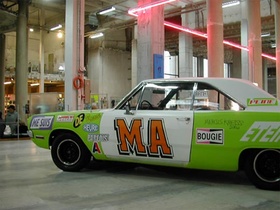
Palais de Tokyo - Paris
The Palais de Tokyo, an art deco building that dates from 1937, reopened in 2001 after new interior design by french architects Anne Lacaton & Jean-Philippe Vassal who selected rough and ready style (concrete floor, wall and roof).
Today the most creative and fun museum in Paris, the olny one to be open till midnight. The Palais de Tokyo, which is right next door to the Musée d'Art Moderne at the Trocadero, has opened as a showcase for contemporary art. The idea is to have no permanent collections, but to let experimental artists have somewhere in central Paris to express themselves, hence an opening full of “installation” and “interactive” art.
There is no permanent collection; instead, dynamic temporary exhibits spread over a large, open space that's reminiscent of a construction site, with a trailer for a ticket booth.
We appreciate the self- service restaurant (great when it’s sunny you can have a meal outside the building), Tokyo Eat the inside restaurant whit great food, the Library – one of the best concerning modern art in Paris...
"Vernissage" every first Thursday of the month… do not miss..
6- Modern Art Museum **** (Musée d'Art Moderne de la ville de Paris)
Editor's choice : Museum of Modern Art - Museum
Museum of Modern Art - City of Paris (Musée d'Art Moderne de la Ville de Paris)
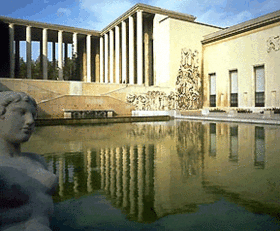
Museum of Modern Art - Musée d'art Moderne de la ville de Paris
Built on the occasion of the International Exhibition of 1937, the Museum of Modern Art was officially opened in 1961.
To a large extent, it owes its specifically Parisian aspect to the generosity of its donors including Dr Girardin (1953) and Mathilde Amos (1955), Berthe Reysz (1972) Germaine Henry and Robert Thomas (1976-1988) and artists Robert Delaunay, Jean Fautrier and Christian Boltanski.
The museum has major collections of works by Georges Rouault, Robert and Sonia Delaunay, Raoul Dufy, Marcel Gromaire and several monumental paintings notably two of the three Henri Matisse triptychs of La Danse (1931-33) and La Fée Electricité (1937) by Raoul Dufy.
Temporary exhibitions form a major part of the museum's activity. Its "historical" program is alternated with monographic exhibitions devoted to great figures of the French or European scene and major European panoramic events combining the historical and contemporary.
The ARC (workshop for research and creativity) is a highly informative source on national and international current events, organising monographic exhibitions and theme-based events on the most up-to-date trends in contemporary art in France and abroad.
Current exhibition: From september 30, 2011 to January 29, 2012
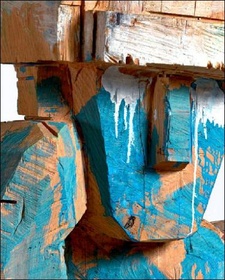
Volk Ding Zero - Folk Thing Zero 2009 Collection privée, Courtesy Thaddaeus Ropac, Paris -
The Musée d’Art Moderne de la Ville de Paris is organising an exhibition of the sculptures of Georg Baselitz . This retrospective interpretation of one facet of the German artist – initially a painter and engraver – will include almost his entire sculptural output, covering a period of more than thirty years.
Few of these works have been shown in France. Now recognised as a part of his oeuvre in its own right, Baselitz's sculpture gradually became more and more monumental in scale.
Rates:
Full rate: 9 €
Concessions: 7 €
Half-price: 4.50 €
Admission free for under-14s
7- Quai Branly Museum**** (Musée du Quai Branly)
Editor's choice : Quai Branly Museum - Museum
Quai Branly Museum: The arts of Africa, Oceania, Asia, and the Americas in the same museum in Paris
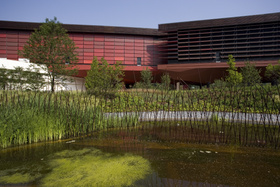
Quai Branly Museum in Paris
In the heart of Paris's museum land, neighbouring the Louvre and the Musée d’Orsay, a few minutes from the Grand and Petit Palais, the Palais de Tokyo and the Musée d’art moderne de la Ville de Paris, the Quai Branly Museum or Musée du Quai Branly in french has an exceptional location on the banks of the River Seine, at the foot of the Eiffel Tower.
The arts of Africa, Oceania, Asia, and the Americas now form part of the historical and artistic grand tour of the capital.
The Musée du quai Branly is an innovative cultural institution - museum, educational and research centre, and public living space all in one. Built on one of the last available sites in the heart of Paris, the architectural design of this original project is the work of Jean Nouvel.
A museum of non-Western arts
During the 20th century, non-Western arts started to be seen in museum collections. This development was largely thanks to cubist and fauvist artists, influenced by writers and critics from Apollinaire to Malraux, and in the wake of the work of such great anthropologists as Claude Lévi-Strauss. The idea of opening a museum in Paris in 2006, entirely devoted to the arts of Africa, Asia, Oceania and America gave shape to a worthy ambition - to enable a whole range of viewpoints, from the ethnologist's to the art historian's, to be brought to bear upon the artefacts in question, and bring official recognition to the place occupied by civilisations and cultural heritages of peoples often held apart from global culture today. Under the august patronage of UNESCO, the Musée du quai Branly has already welcomed over 3.5 million enthusiastic visitors to the Pavillon des Sessions, its 'branch' at the Musée du Louvre, since the year 2000.
Two very good restaurants next to the Quai Branly Museum are : Chez l'ami Jean and Les Fables de la Fontaine .
8- Musée de l'Orangerie****
Editor's choice : Musée de l'Orangerie - Museum

Les Nymphéas by Claude Monet at the Musée de l'Orangerie in Paris
Musée de l'Orangerie: The world’s most famous water lilies — the ones painted by Monet — have a refurbished home at this museum, which reopened in May 2006 after six years of renovations. The space also holds an eye-popping collection of paintings from Picasso, Matisse, Modigliani, Cézanne, Renoir, André Derain and others.